Showing posts with label Travel: Eastern Europe. Show all posts

Praque Castle, Czech Republic


Prague Castle is the largest medieval castle complex in Europe and the ancient seat of Czech kings throughout the ages. It is Prague's premier tourist attraction.
Several destructive wars and fires (and the subsequent renovations), along with differing political forces have combined to create an intriguing mix of palaces, churches and fortifications, spread over 7 hectares (18 acres).The Prague Castle complex comprises three courtyards and a great many buildings, including Saint Vitus Cathedral (the most recognisable landmark in the city), several palaces, viewing towers, museums and art galleries, cafés, a monastery and Golden Lane.It is possible to wander around the courtyards for free, but for a meaningful visit and to enter any of the buildings, the interiors of which are quite stunning, visitors need to purchase a ticket or visit the complex as part of a tour.
Classical concerts are a popular feature of the Prague Castle complex, and are held at Lobkowicz Palace and St. George's Basilica - classical concert listings.The first known building on the site of Prague Castle was erected in the 9th century. In the 12th century it was replaced by a Romanesque palace. In the 14th century it was rebuilt in the Gothic style, under the reign of Charles IV.
A further reconstruction of the Royal Palace then took place under the Jagellons at the end of the 15th century.Following a fire in 1541, Prague Castle underwent further works. The Spanish Hall was added during the reign of Rudolf II. And final alterations were made by Empress Maria Theresa, under the direction of the celebrated architect M. Pacassi.After World War I, renovations to the castle buildings and to the Prague Castle Gardens were undertaken by the architect J. Plecnik.Today, Prague Castle is the seat of the President of the Czech Republic and serves as the historical and political centre for both city and state.The Changing of the Guard at the front gates takes place every hour. At noon the ceremony includes a fanfare.


Old Town Square

Step into the Old Town Square in Prague and journey back in time, 600 or 700 years. As you stand in awe, the dramatic history of Prague permeates the air.
The Old Town Square (Staroměstské náměstí) is one of two main squares in Prague (Wenceslas Square is the other, just 5 minutes walk away).With its ancient buildings and magnificent churches, this is one of the most beautiful historical sights in Europe.Dating from the 12th century, the Old Town Square started life as the central marketplace for Prague. Over the centuries buildings of Romanesque, Baroque and Gothic styles were erected around the market, each bringing with them stories of wealthy merchants and political intrigue.The Old Town Square's most notable sights are the Old Town Hall Tower & Astronomical Clock, the Church of Our Lady before Tyn and St. Nicholas Church.At the centre of the Old Town Square is the Jan Hus statue, erected on the 6th July 1915 to mark the 500th anniversary of the reformer’s death. The groundswell of supporters for his beliefs during the 14th and 15th centuries eventually led to the Hussite wars.To fully appreciate the beauty of the Old Town Square, sit back and soak up the atmosphere over a coffee or a cool beer at one of the pavement cafés lining the square. Or climb the Old Town Hall Tower for a stunning view over the square.
Old Town Hall Tower & Astronomical Clock, Old Town

The Astronomical Clock, built in to one side of the Old Town Hall Tower, dates from the 15th century.
To fully appreciate the clock's intricate construction, join the crowd in front of the tower to observe the procession of the Twelve Apostles: on the hour, every hour, a small trap door opens and Christ marches out ahead of his disciples, while the skeleton of death tolls the bell to a defiant statue of a Turk.Below the Astronomical Clock are 12 medallions with the signs of the zodiac, added by Josef Manes in 1865.The Old Town Hall Tower, built in 1338, is one of the most striking buildings in Prague. Inside is a staircase and an elevator. For a fee, visitors can climb or ride to the top to experience terrific views over the Old Town Square and the rest of the Old Town.In 1364 the Old Town Hall Tower was joined to a private house adjoining it, which in turn was knocked into other houses beside that. This amalgamation of buildings became known as the Old Town Hall.Extensive renovation in 1470 further integrated the various houses of the Old Town Hall, and refurbished the whole in the Gothic style.

Today the Old Town Hall hosts civic ceremonies in its many rooms, and also houses the primary Prague Tourist Information Centre

Budapest, Hungary


Vienna, Austria

Schoenburnn Palace, Vienna


Praque, Czech Republic


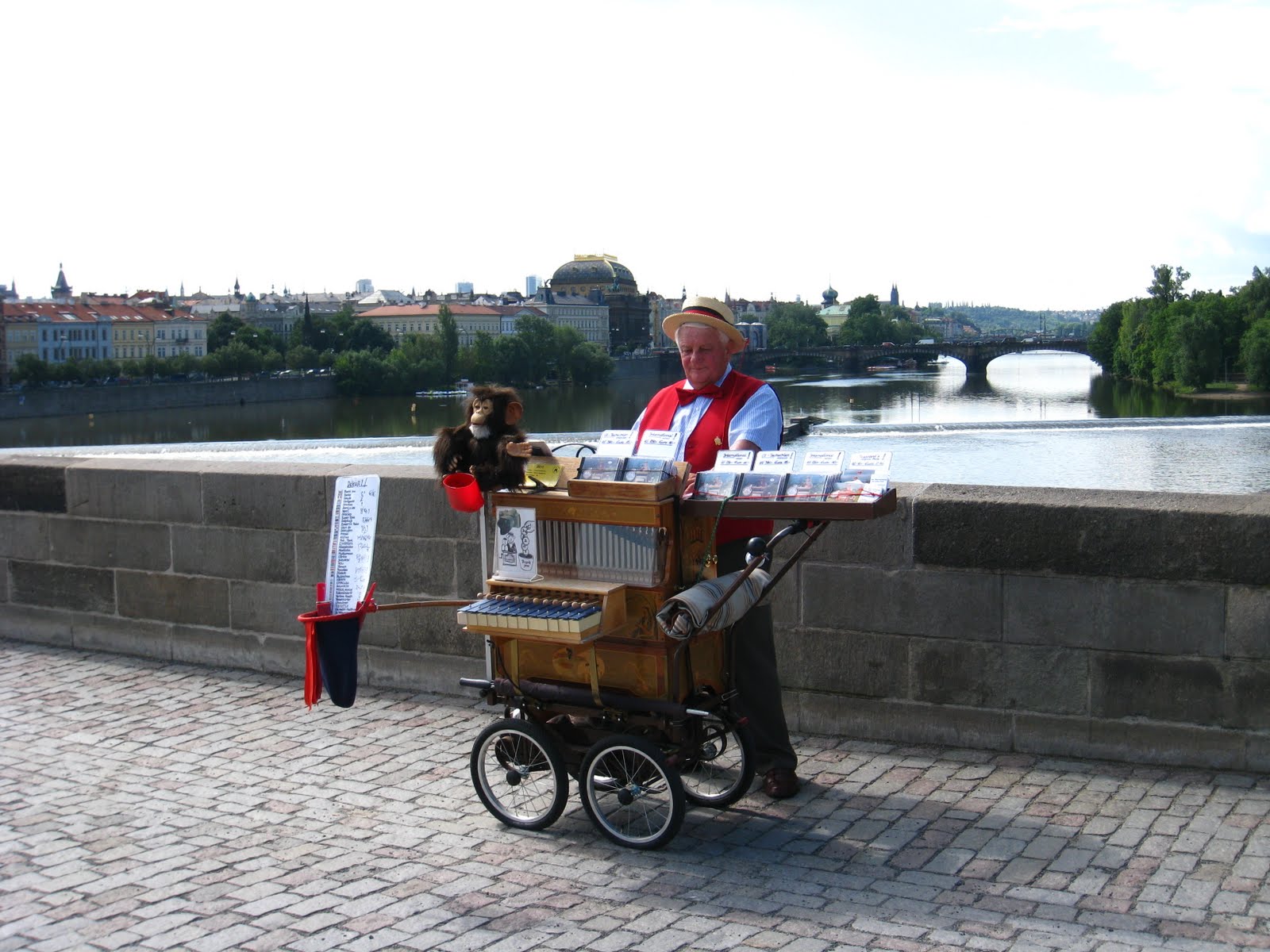
Charles Bridge (Karluv Most) is a 14th century stone bridge linking the two sides of Prague. This magnificent structure is one of the city's finest attractions, and is the main pedestrian route connecting the Old Town with the Lesser Town (Mala Strana) and Prague Castle.
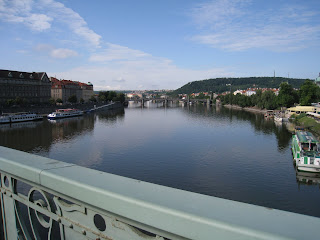
From Charles Bridge visitors enjoy fairy-tale views of the Prague skyline. The wide expanse of the river flows beneath it, flanked on both sides by elegant buildings. Prague Castle towers above in its eminent position. Here you are truly in the centre of the city.Charles Bridge throngs with people during the day. Street artists sketch and musicians play; look out for the jazz band, who are particularly entertaining. But for a truly romantic and less crowded stroll, try early morning or any time in the evening.King Charles IV commissioned the bridge. The foundation stone was laid in 1357. Charles IV's favourite architect and builder, Peter Parler, oversaw the majority of the work. The initial idea was to build a functional construction for knight tournaments, and for many years the only decoration on the bridge was a simple crucifix. Later, the Catholic desire for ornamentation resulted in 30 statues being erected between 1600 and 1800.There are now 75 statues on Charles Bridge, but most are copies, as floods and catastrophes over the centuries damaged the originals. Perhaps the most interesting, as well as the oldest, is that of John of Nepomuk (8th from the right as you cross towards Prague Castle).The entrance to Charles Bridge is marked at both ends by towers: the Old Town Bridge Tower and the Mala Strana Bridge Tower.


The Lesser Town Bridge Tower is situated at one end of Charles Bridge, and is the ancient gate to the Lesser Town (Mala Strana).
For tourists arriving from the Old Town, this is the main pedestrian entrance to the Lesser Town, a lovely quarter of Prague with restaurants, bars and boutique shops.The Lesser Town Bridge Tower was built in the second half of the 15th century under the rule of King George of Podebrady. The model for its construction was undoubtedly the Old Town Bridge Tower, constructed earlier on the opposite side of Charles Bridge.Connected to the Lesser Town Bridge Tower by a walkway is a smaller tower, Judith's Tower, the only remaining part of the original Prague bridge, the Romanesque Judith's Bridge, which was destroyed by floods in 1342.Inside the Lesser Town Bridge Tower is an exhibition dedicated to the eventful history of Charles Bridge, with graphic descriptions of the invading armies that have crossed it.
There are stairs to the top, which you can climb for a fine view over the Lesser Town, Charles Bridge, the Vltava River and across into Prague's Old Town.A small Prague Tourist Information Office is also sited here, open April-November

Travel tips

The comfortable cosmo travel bus we travel on through the 9 days of vacation in Europe.
Our journey started from Munich (Germany), Praque ( Czech Republic), Vienna (Austria), Budapest(Hungary), Salzburg (Austria).

Travel date: 13 June 2011 - 22 June 2011
Some travel tips to travel during the summar
1. Advise to bring a travel kettle as all the hotel rooms does not provide
2. There is no iron provided
3. Some hotels hair dryer very slow advise to bring your own as it is more powerful.
4. Universal travel adapter
5. Credit card Atm pin number as most of the countries required the pin number.


Travel adapter in Europe

Tax Refund In Europe

It has been a hassle trying to get the tax refund from the Munich (Germany) airport as you need to get the custom stamps after checking on your goods then to proceed to the global blue counter to redeem your cash, if you pay by credit card the tax refund will be credited to your credit statement after some weeks.

For further details you may check out thier web sites.

http://www.global-blue.com/

Some additional information on value added tax refunds procedure.
http://www.ricksteves.com/plan/tips/vat.htm
