
Showing posts with label Travel: Europe. Show all posts
Showing posts with label Travel: Europe. Show all posts

Eze, France
Eze is a medieval village perched like an eagles nest on a narrow rocky peak overlooking the Mediterranean sea. The ancient fortified village is still crowned with the ruins of its 12th-century fortified castle (torn down in 1706), sitting on a narrow rocky peak. The castle grounds host the well-known Jardin Exotique, and from the top (429 m) you'll have an good view of the coast (it will cost you, though).
The village forms a circular pattern around the base of the castle. The old buildings and narrow streets are very well restored, with high stone walls and narrow roadways of red-brick centered stone. The narrow roads wend their way upward to the well sign-posted Jardin Exotique Panorama. When you finally arrive at the top, you'll find the way to the Jardin, and the panoramic view, blocked by a 12 F admission cost, a detail that wasn't mentioned earlier and lower.
Any sense of this ancient village's medieval past is, however, offset by the multitude of souvenir shops and streets full of tourists. On a Friday in March, the narrow streets already had a fair number of tourists, admittedly including ourselves. Eze is a pretty village, but it's not at all off the beaten path. The two-level square clock tower on the church is lovely [photo-5]. There are pretty little shaded squares, and the view out over the valley as you're walking up is very nice. Along the way we found a stand selling herbs that was picturesque and smelled great. There are also some terrace cafés at the top and some high-class hotel restaurants in the old village. Eze village sits beside the very busy Moyenne Corniche (RN7), the main road (along with the Basse Corniche and Grande Corniche) between Nice and Monaco-Menton. The Moyenne Corniche is usually very crowded, and in the summer extremely crowded, so plan an early start. At the road junction you can park in the lot for 5 F and hour. The public toilets near the parking lot cost 2 F, but they are large and clean. The area near the road and parking lot is where you'll find cafés, restaurants, shops, verrerie (glass blowing). The ancient village is contrasted by the residential Eze-sur-Mer, a seaside "town" between Beaulieu-sur-Mer and Cap d'Ail. Eze-sur-Mer has beaches, water sports, cafés, restaurants and hotels. And a train station.

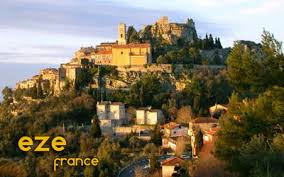


The village forms a circular pattern around the base of the castle. The old buildings and narrow streets are very well restored, with high stone walls and narrow roadways of red-brick centered stone. The narrow roads wend their way upward to the well sign-posted Jardin Exotique Panorama. When you finally arrive at the top, you'll find the way to the Jardin, and the panoramic view, blocked by a 12 F admission cost, a detail that wasn't mentioned earlier and lower.
Any sense of this ancient village's medieval past is, however, offset by the multitude of souvenir shops and streets full of tourists. On a Friday in March, the narrow streets already had a fair number of tourists, admittedly including ourselves. Eze is a pretty village, but it's not at all off the beaten path. The two-level square clock tower on the church is lovely [photo-5]. There are pretty little shaded squares, and the view out over the valley as you're walking up is very nice. Along the way we found a stand selling herbs that was picturesque and smelled great. There are also some terrace cafés at the top and some high-class hotel restaurants in the old village. Eze village sits beside the very busy Moyenne Corniche (RN7), the main road (along with the Basse Corniche and Grande Corniche) between Nice and Monaco-Menton. The Moyenne Corniche is usually very crowded, and in the summer extremely crowded, so plan an early start. At the road junction you can park in the lot for 5 F and hour. The public toilets near the parking lot cost 2 F, but they are large and clean. The area near the road and parking lot is where you'll find cafés, restaurants, shops, verrerie (glass blowing). The ancient village is contrasted by the residential Eze-sur-Mer, a seaside "town" between Beaulieu-sur-Mer and Cap d'Ail. Eze-sur-Mer has beaches, water sports, cafés, restaurants and hotels. And a train station.
Perfume
Two Grasse parfumeries are represented in Eze village, Galimard with a shop and Fragonard with shop as well as a factory you can visit. Both parfumeries offer a 10% discount if you have the Eze map, free from the Office de Tourisme located at the corner of the parking lotLiechtenstein, Europe
The tiny Principality of Liechtenstein, an independent state tucked between Switzerland and Austria, is one of the most picturesque alpine countries in Europe. Despite being only 160 square kilometers in size and having a population of just 35,000, Liechtenstein is an economic powerhouse thanks to its favorable tax laws, and it's the most industrialized nation in the world, though you'd never know it from its forest-covered hillsides and alpine meadows. Settled since the Early Stone Age, it was also important during Roman times, eventually becoming the Imperial Principality of Liechtenstein in 1719 and fully autonomous in 1806. Today, the country is a popular tourist destination thanks to its lovely mountain setting, many excellent hiking trails, ski and winter activities, and its impressive museums and castles.
Liechtenstein's Capital City: Vaduz
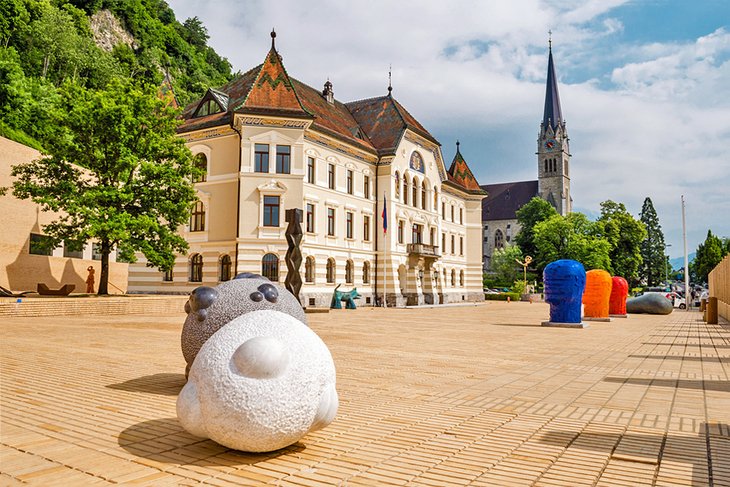
Parliaments in Vaduz
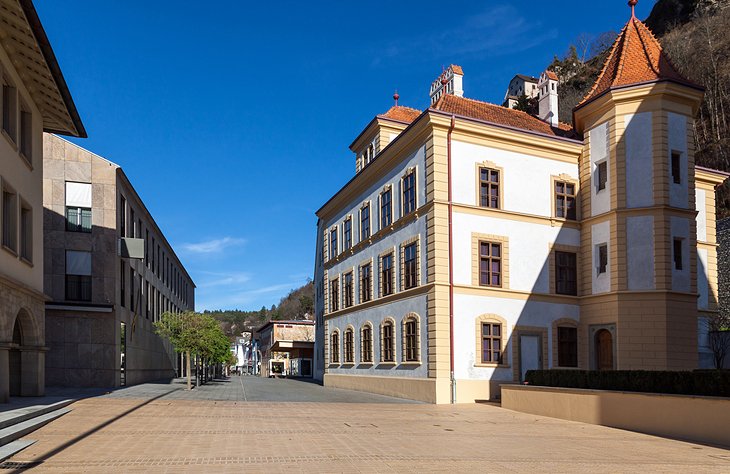
One of the most picturesque capitals in Europe - and certainly the smallest - Vaduz is home to the Liechtenstein Center, a tourist information center offering everything the traveler needs to get the most out of their visit. From here, it's easy to explore the city's main attractions, including its parliament building near the banks of the River Rhine in Peter-Kaiser-Platz. Also worth seeing is the Rathausplatz, home to the historic Town Hall (Rathaus), and the Neo-Gothic parish church (Pfarrkirche) built in 1873, also known as the Cathedral of St. Florin. Although it's not open to the public, you'll want to get some photos of the impressive 12th-century Vaduz Castle (Schloss Vaduz), home to the country's monarch.
State of the Art: Kunstmuseum Liechtenstein
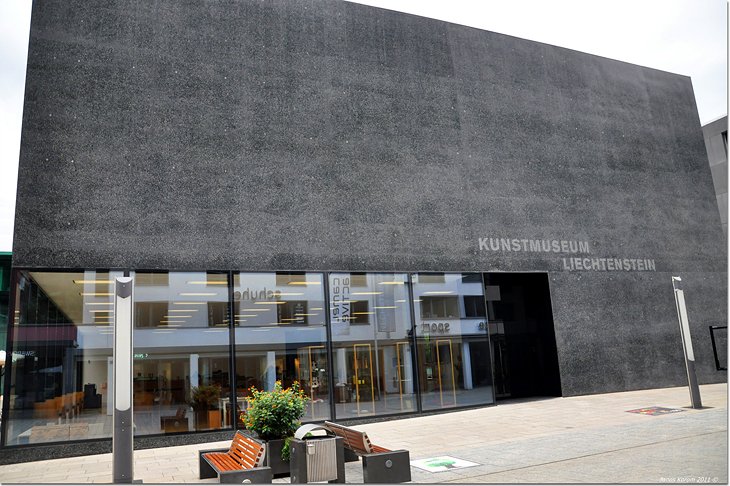
State of the Art: Kunstmuseum Liechtenstein
Housed in a state-of-the-art facility in Vaduz, Liechtenstein's State Art Gallery (Kunstmuseum Liechtenstein) showcases many fine examples of modern and contemporary artwork. In addition to frequent temporary exhibits, its permanent collection includes pieces from the 19th century, including sculptures and works from the collection of the Prince of Liechtenstein (most of the royal collection is housed in the Liechtenstein Museum in Vienna).
Address: Städtle 37, FL-9490 Vaduz, Liechtenstein
Official site: www.kunstmuseum.li/?page=1&lan=en
3 Gutenberg Castle
Gutenberg Castle
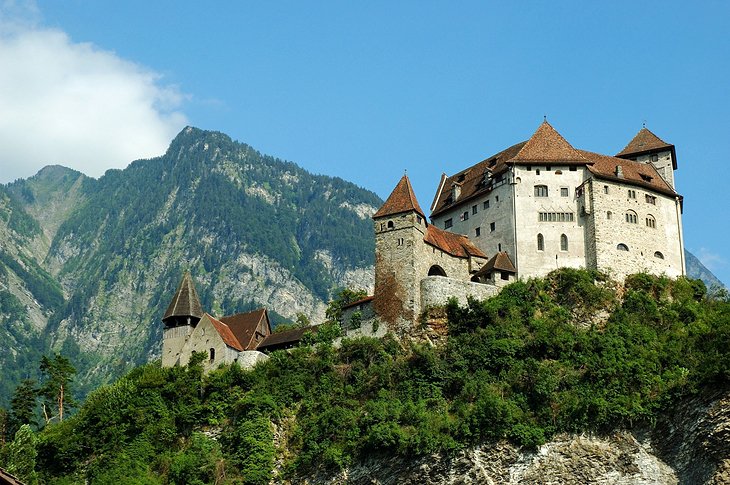
High above the village of Balzers in the south of Liechtenstein stands majestic Gutenberg Castle (Burg Gutenberg), a superbly preserved fortress dating from the Middle Ages. The 70-meter-high hill on which the castle stands has been inhabited since Neolithic times, with many of the most important archaeological finds - including the ancient Mars von Gutenberg statuette - now housed in the Liechtenstein Landesmuseum. Highlights include the chapel and rose garden, along with many fun cultural events in the warmer months, such as concerts and theatrical performances.
Address: Fürstenstrasse 50, 9496 Balzers
Liechtenstein National Museum
Liechtenstein National Museum
A must-see while in Vaduz is the excellent Liechtenstein National Museum (Liechtenstein Landesmuseum), a state-owned attraction housed in a splendidly preserved 15th-century former inn once visited by Johann Wolfgang von Goethe in 1788. Highlights include a superb 1:10,000 scale relief model of the principality, as well as exhibits focusing on the country's prehistory and early history, along with displays of weapons and religious art.
The Towns of Nendeln and Eschen
 Triesenberg's Culinary Delights
The Towns of Nendeln and Eschen
The small towns of Nendeln and Eschen are the principal communities of the lowland area of Liechtenstein and are well worth a visit. Nendeln is notable for its old foundations from a Roman villa, as well as the Schädler Pottery, established in 1836 and the oldest craft workshop in the country. Famous for its stoneware crockery and traditional tiled stoves, this art-related attraction offers guided tours of the workshop, glazing area, and kiln room. Of interest in Eschen are the Pfrundhaus, a 14th-century building used to display local art, and the attractive Holy Cross Chapel. Eschen is also the starting place of an easy one-and-a-half-hour hike offering superb views of the surrounding area.
Schaan and the Liechtenstein Festival
Just three kilometers north of Vaduz at the foot of the Drei Schwestern massif is Schaan, a busy little industrial town notable for its old Roman fort foundations. In a beautiful location perched above the town is the 18th-century pilgrimage church of Maria zum Trost, notable for its fine views. One of the oldest towns in Liechtenstein, Schaan is home to the DoMuS center with its exhibits of local history and art, an interesting coppersmith's workshop, as well as the nearby Calculator and Typewriter Museum. Schaan is also a good place to begin a hike and includes a number of well-marked trails of varied difficulty. It's also home to the Liechtenstein Festival, a two-day celebration of music, entertainment, and food.
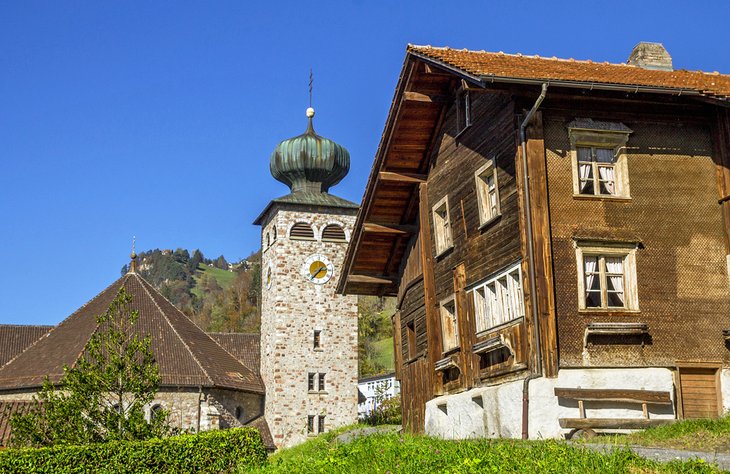
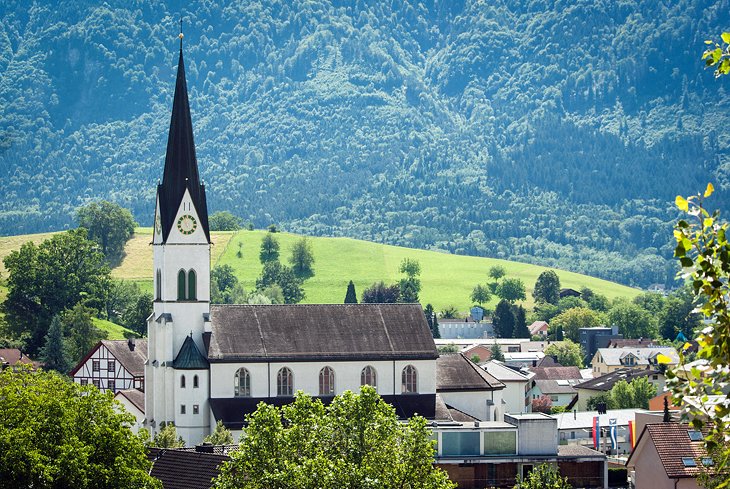
Triesenberg, the largest municipality in Liechtenstein, lies in a beautiful location in the middle of an alpine valley just six kilometers from the capital of Vaduz. The picturesque village itself is known not only for its splendid scenery and unique dialect - a variation of German originating from the Walser region - but also for its food festival, the Triesenberger Wochen, held each year from mid-October to the end of November. During the festival, local restaurants and hotels serve up traditional dishes of the Walser people, many of them centuries-old and unique to the village. There's no shortage of beautiful vistas from the village's cute chalets and small inns, making Triesenberg a great place from which to explore Liechtenstein.
Hiking the Historical Eschnerberg Trail
Hiking the Historical Eschnerberg Trail
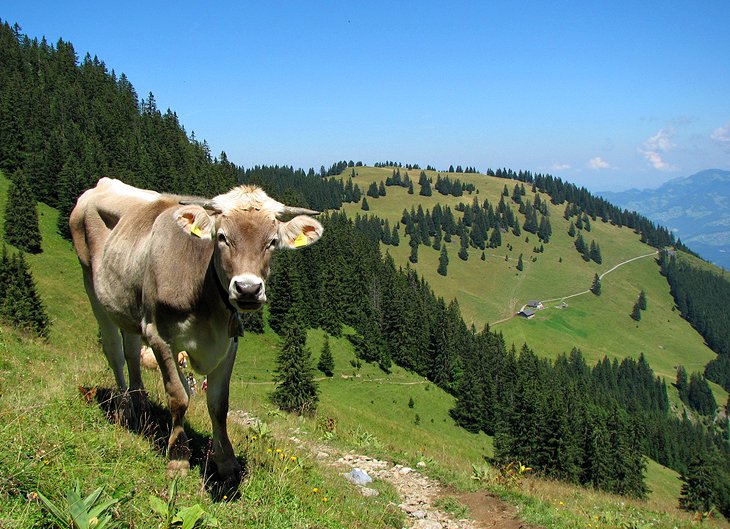
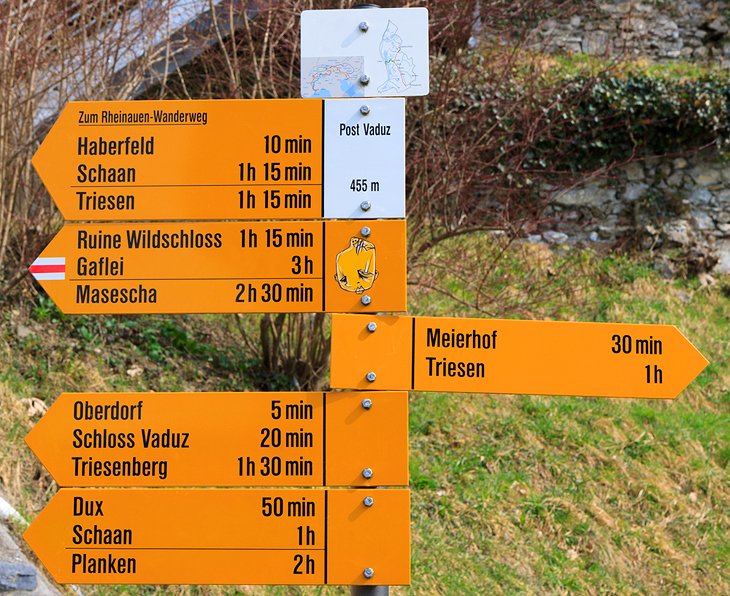
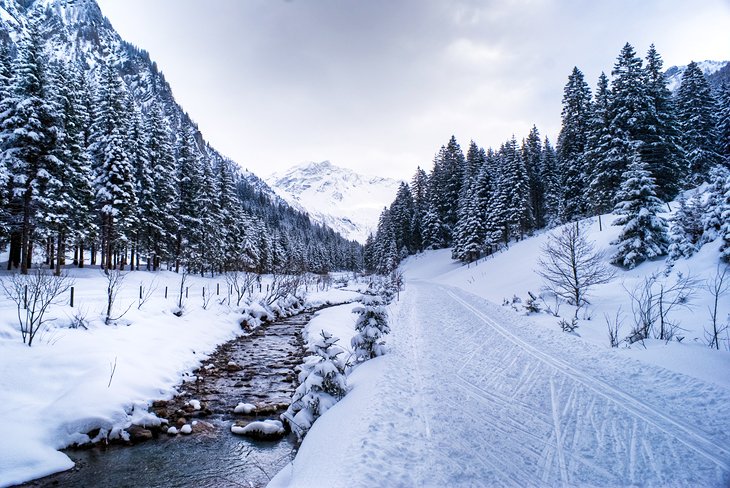
Thanks to its alpine setting and quaint towns and villages, Liechtenstein is a hiker's paradise, drawing outdoor enthusiasts from across Europe to its mountain peaks, wooded slopes, and attractive valleys. Numerous well-established trails crisscross the country (just look for the bright signs showing walking times), one of the most popular being the 15-kilometer Historical Eschnerberg Trail connecting the towns of Bendern and Schellenberg. Highlights of this fun trail include the prehistoric settlements of Lutzengütle and Malanser, as well as many spectacular views over the Rhine and the surrounding mountains. Another popular trail is the Princes' Way Hike through the scenic Rätikon mountain range and with superb views of the famous Three Sisters (Drei Schwestern) mountains.
Winter Fun in Malbun
Famous as Liechtenstein's only winter resort, the small town of Malbun, once only inhabited in summer, is now a draw for winter sports enthusiasts. On an Alpine ridge near the Saminatal Valley, Malbun boasts perfect snow conditions that led to the establishment of the first ski lifts and slopes in the 1960s, and today, its many groomed trails and après ski activities enjoy one of the longest seasons in the Alps. All told, more than 23 kilometers of pistes are maintained offering suitable terrain for skiers of all abilities, served by three lifts capable of hauling skiers to heights of 2,000 meters. For kids, Malbi Park Kinderland offers beginners lessons and programs, and the area also boasts a large network of Nordic ski trails.
Country Castles: Schellenberg
Country Castles: Schellenberg
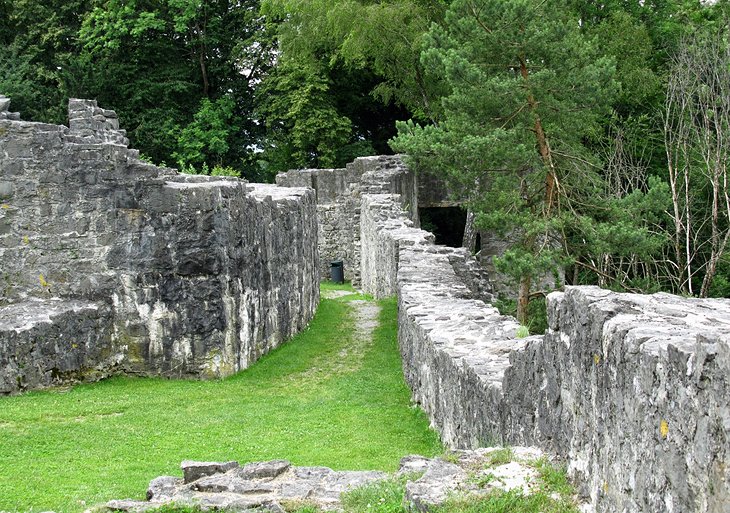
Liechtenstein is home to five castles, two of which remain intact: Schloss Vaduz, home of the country's monarchs, and Burg Gutenberg in the village of Balzers. Of the others, all that is left are ruins, but each has its unique charms. If you're able to visit just one location, make it Schellenberg where you'll actually be rewarded with a chance to explore two old ruins at once. The larger of the two, the Upper Castle (Obere Burg), was built in 1200 and once had all the elements of a typical medieval castle. The smaller, the Lower Castle (Untere Burg), was built in 1250, but by the 16th-century both had fallen into disrepair. The third set of ruins, Schalun Castle - also known as Wildschloss - is within walking distance of Vaduz and dates from the 12th century.
Lyon Attractions, France
Lyon is a city in east-central France, in the Rhône-Alpes region, situated between Paris and Marseille. Lyon is located approximately 470 kilometres from Paris, 320 km from Marseille, 420 km from Strasbourg, 160 km from Geneva
Lyon is a perfect destination for leisure vacation and sightseeing trips. As a second metropolitan city of France, Lyon sits in east-central France. The city boasts an array of cultural and historic destinations. The city is also a gastronomic capital and is considered an urban alternative to popular French cities like Marseilles and Paris by many tourists and Francophiles. Many families along with their kids travel to Lyon to enjoy their vacation checking beautiful gardens and parks of the city. Also, those travelers who are vexed with cosmopolitan culture of Paris, tend to enjoy their weekends in Lyon.
1. Vieux Lyon (Old Lyon):
One of the biggest Renaissance areas in Europe after Venice is the Old Lyon. Many buildings in Vieux Lyon have been remodelled and renewed over the last few years. Most ancient buildings were erected in 15th and 17th century. This old historic quarter was completely refurbished in the 1990s. The travelers can now enjoy looking at its beautiful, cobble-stoned narrow streets and craftsmen shops. Apart from these unique attractions, there are many other noteworthy hotels, restaurants and popular boutiques in Vieux Lyon. Walk along the narrow paths to experience the true atmosphere of Old Lyon, which doesn’t cost you a penny.
2. Lyon Cathedral (St. Jean Cathedral):
Another fascinating destination of the city is a striking impressive Roman Catholic Lyon cathedral. This famous cathedral city is the world heritage site. It was started by the two famous city bishops Saint Irenaeus and Saint Pothinus. Today, the St Jean Cathedral is considered a seat of Lyon Archbishop. Interesting tourist attraction of the cathedral is astronomical, clock which was there from the 14th century, Stained Glass and Rose Window. The site mesmerises millions of European tourists every year.
3. Chinatown Lyon:
A vacation to Lyon is incomplete without checking Lyon’s Chinatown. It’s the biggest tourist attraction in France. The Chinatown extends for two blocks and boasts many incredible shops and restaurants. Because of its compact size, the entire area can be easily explored in one afternoon itself.4. Gadagne Museum:
Standing gorgeous in a beautiful Renaissance villa, the Gadagne museum has two diverse attractions in it. One is the Museum of Lyon History focusing on the archaeological lithographs, vestiges, paintings and other relevant documents and the other is the Museum of World Puppets which mainly focus on puppetry. So, check out the variety of puppets collected and placed from every corner of the planet at this museum.5. Rue St. Jean:
Rue St. Jean is a busy cobble-stoned pedestrian area completely packed with tourist restaurants and souvenir stores. Another street that is not quite busy and runs parallel to this street is Rue des Trois Maries.
6. Checkout Traboules:
Traboules is just like a tunnel meant for passages through buildings. These are very famous in Lyon and most of these passages in the city leads to gardens and courtyards. Almost as many of these Traboules are blocked off or just used for maintenance and storage purposes and only dozens are left open to the public for free. These tunnels have a great history and resisted the city from German invasion during Second World War.Venice, Italy
Top 10 Things to Do in Venice

- Get Lost in Venice
There is nothing, I repeat nothing, that is as important when you’re visiting Venice than just wandering aimlessly through its streets and alleys. If you only had 3-4 hours in the city, I’d recommend that you do this before you set foot inside a single museum or attraction – it’s that critical to enjoying your visit. By wandering (especially if you point yourself in the exact opposite of the direction where the herd is going) you can find Venice’s many charming and often-empty squares and streets, which goes a long way toward helping you appreciate the city. I’d almost say you could ignore basically everything else on this list and just stroll around without a map… But although I might not go that far (again, unless you’ve only got 4 hours or less), I do consider the sentence “get lost in Venice” an order, not a suggestion.
Visit St. Mark’s Basilica
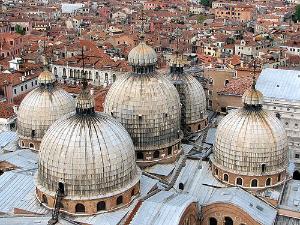
I love visiting churches in Italy, but this is – by far – my favorite church in the country. It’s beautiful outside, with its big onion domes and multi-colored marble pillars, and the interior is floor-to-ceiling mosaics. There’s no fee to tour the main part of the basilica, and even booking an entry time online (so you don’t have to wait in the sometimes-long line out front) is free, so after you’ve wandered the city this should be your next stop. There are three smaller museums within the basilica which you’ll have to pay an entry to see; your budget and overall interest should dictate whether you visit all of them, but if you’re just going to pick one then by all means take the narrow and steep staircase in the entry alcove up to the museum that has the original horses which used to overlook the square – in addition to seeing the horses, you’ll also get to go out on the roof and overlook the square yourself.
See St. Mark’s Square When it’s Empty
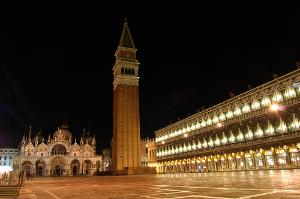
I know in #1 I said that you should point yourself in the opposite direction to where all the tourists are going, and since 99.9% of them are headed for St. Mark’s Square you may find it a little surprising to find this piazza so high on my to-do list in Venice. But the key here is to visit the square when everyone else isn’t there. Of course, in order to do this you’ll probably need to spend at least one night in Venice, but I can think of worse things to “need” to do. The best times to catch St. Mark’s Square at her most vulnerable are early morning and late evening, before the day-trippers arrive or after they’ve left. Venice isn’t a nightlife town, so it doesn’t take long after the restaurants close for the square to be emptied of much of the crowd. Personally, I like it best at night, but I’ll leave the choice to you.
Take the #1 Vaporetto for a Grand Canal Tour
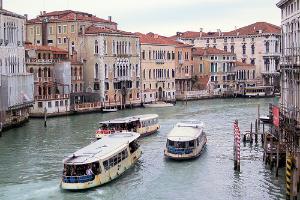
I think the easiest and most pleasant way to get around Venice is on foot, but the Grand Canal only has a few bridge crossings and taking a ride on Venice’s water-buses is a fun transport method. Even beyond the practical reasons for taking a vaporetto, however, there’s the fact that the slow #1 vaporetto that runs the length of the Grand Canal is the ideal equivalent to a city bus tour. I’d recommend either bringing along a self-guided tour (Rick Steves has a good one in his guidebook) so you can pick out the sights along the way, or just sitting back and enjoying the view no matter what the significance of the buildings is. You’ll enjoy the ride either way, even more so if you’ve got a good seat and some gelato.
Watch a Glass-Blowing Demonstration on Murano Island
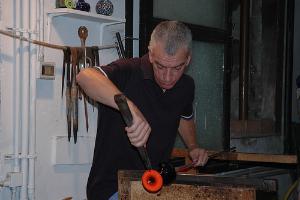
This is kind of a tricky one, because so many of the glass-blowing demonstrations on nearby Murano Island are very tourist-trappy, but I have it on this list for a couple of reasons. First, most people I know have never seen anyone do glass blowing or glass sculpture, so it’s entertaining and educational even if it is touristy. Second, visiting another island in the Venice lagoon is a great idea during your stay, and since Murano is closest it’s the easiest one to visit (especially if you’re short on time). If you want to avoid the overly touristy glass demonstrations, catch a vaporetto to Murano (instead of a boat booked by your hotel or a particular glass shop) and walk around the streets until you find a studio that looks relatively open. There are more glass-blowing studios on Murano than just the touristy ones.
Tour the Doge’s Palace
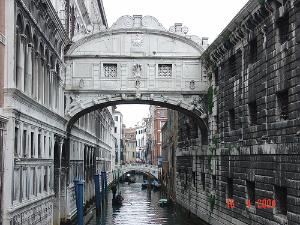
Right next (and partly connected) to St. Mark’s Basilica, the Doge’s Palace is arguably the second most important “attraction” in Venice after the basilica (if you don’t count the city itself as an “attraction”). While there are several good reasons to pay the hefty admission fee to tour the Doge’s Palace (Palazzo Ducale in Italian), probably the most popular stop on the tour is when you get to walk over the famous Bridge of Sighs. You can see the bridge from the outside without buying an entry ticket, but the only wa to walk on the bridge yourself is as part of a Doge’s Palace tour.
 T
TTake the Elevator to the Top of the Campanile
While you can get a great view of St. Mark’s Square from the roof of St. Mark’s Basilica, you can’t get a great view of the church’s roof when standing on it. For a view that includes both the basilica and the piazza, buy a ticket for the short elevator ride to the top of the Campanile, or bell-tower, that’s in front of the church. The views are great, and you get an up-close-and-personal look at the big bells that you’ll hear ringing out the time all over the city. If you want to avoid getting your ears blown off, I’d advise making the trip to the top of the tower at something other than the hour mark.
Wander the Streets of Burano Island
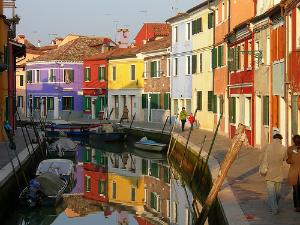
With a little extra time in Venice, after your visit to Murano take a vaporetto further into the lagoon for a trip to Burano Island. In general, the further you get into the lagoon from the core Venetian islands, the less crowded they get – Burano is usually less crowded than Murano, for instance. And with its almost cartoon-like brightly colored buildings, it makes the perfect backdrop for a stroll. Seriously, the colors are so brilliant and cheerful, I defy you to walk around Burano for even a half-hour and not have a smile on your face. Go ahead, try it.
Take a Hike on Torcello Island
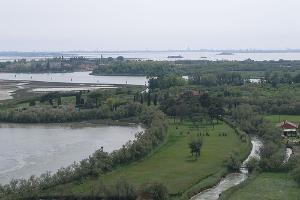
Got even more time? Even more sick of the crowds in Venice? Then get back on the boat and take the trip to my favorite of the lagoon’s islands – Torcello. It’s a short trip from Burano, but can take up to an hour if you go straight to Torcello from Venice. Either way, it’s the ideal spot if you’re in the mood for less structure and more nature. Most of Torcello is a nature reserve, and while you can’t actually go hiking out in the fields, you can certainly get away from the tourist hordes and enjoy the tranquil view. There are roughly 20 people who still live on the island, and there’s only one (super expensive) hotel, although there are a few places to eat. The main “sight,” which I happen to just adore, is a 7th century church on the island with more exceptional mosaics (a must if you liked St. Mark’s).
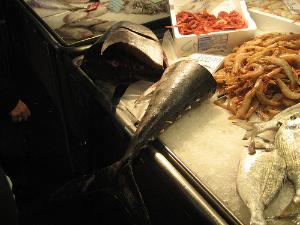
If you’re not a foodie, this may not be something you’d put in your top 10 Venice experiences… But I love food, and I love food markets. In Venice particularly, I think a food market is as culturally interesting as it is food-related. After all, this network of islands isn’t exactly teeming with vegetable gardens or grocery stores (not sure if you noticed, but there’s a lot more water than earth going on here). So visiting the famous Rialto market is a great way to see how real Venetians get their food supplies. All the locals shop here, from restaurateurs to ordinary folk just stocking their kitchens. The Rialto market is particularly known as a fish market, but there’s plenty of fresh veggies and fruit for sale as well. If you’re doing more than just browsing, remember that you don’t handle the merchandise until after you’ve paid for it – point at what you want and the vendor will choose and bag it for you. (As a bonus, it’s within sight of the Rialto Bridge, which is certainly worth a little bit of space on your camera’s memory card.)
You may have noticed that going for a gondola ride in Venice isn’t on my list. I know that for many people it’s one of those things that they feel like they have to do in Venice or they’ll feel like they haven’t been to Venice. I may be in the minority on this one, but I feel like gondola rides are way overpriced, and not nearly the quiet/romantic experience you might expect them to be. So not only isn’t a gondola ride in my top 10, it’s not on my Venice to-do list at all.
Museums, Brussels ( Belgium)
Museums
| The Museum of Ancient Art The Museum of Ancient Art has got a vast collection of paintings, sculptures and drawings from the 15th until 18th century. Built up around a core of revolutionary captures and deposits of the French state, this collection was constantly enriched by the acquisitions, but also by gifts and legacies of numerous patrons. The paintings of the Ancients of the southern Netherlands make up an essential part of this collection (Rogier van der Weyden, Petrus Christus, Dirk Bouts, Hans Memling, Jérome Bosch, Bruegel, Pierre-Paul Rubens, Jacob Jordaens, Antoine van Dyck). The visit also includes an exceptional collection of terra cotta "modelli" from the 17th and 18th centuries, as well as a beautiful series of paintings representing foreign schools. | |
| Magritte Museum In the building of the Royal Museums for Fine Arts of Belgium, visitors will be able to discover the world's largest collection of René Magritte's works. The collection is a perfect proof of René Magritte's oeuvre and covers all the periods from his life. The works on display, among which his most important masterpieces, are mainly from the legacies of Irene Scutenaire-Hamoir and Georgette Magritte and from purchases made by the Royal Museums for Fine Arts of Belgium, completed with works on loan from private persons. |  |
|
The Museum of Musical Instruments is a strikingly beautiful building in Brussels combining the architectural styles of Neo-Classic and Art Nouveau. Housed in the museum is a collection of more than 7000 instruments of varying kinds and origins. On the top floor, the indoor & outdoor MIM Restaurant provides visitors with a magnificent 360° view of Brussels.
|  |
|
The former home of Art Nouveau's best-known architect, Victor Horta, is now the Horta Museum - a showcase of stained glass and subway tile, pale wood and wrought iron whose every corner seems magically bathed in golden sunlight.
|  |
| The Dinosaur Gallery at the Royal Belgian Institute of Natural Sciences Explore the largest dinosaur museum in Europe on permanent display at the Museum of Natural Sciences starting on October 27. This is a great exhibit for the whole family, with many new dinosaur skeletons to discover and learn about as well as hands-on activities for children. |  |
|
Housed in an art nouveau masterpiece designed by Victor Horta, this museum pays homage to a particular Belgian passion, cartooning. Tintin and the Smurfs are the most famous Belgian comic strip characters but the museum also displays artwork from over 670 cartoonists. Other displays detail the stages of putting together a comic strip, from examples of initial ideas and pencil sketches through to final publication. Arranged over three levels, the museum also has a library and an art nouveau brewery.
Discover the centre of Brussels and its inhabitants by following the Comic Strip Route and admiring comic strip façades, walls and statues.
|  |
| Christmas Markets During the month of December Brussels' Grand Place is magically transformed into a winter wonderland of holiday delights with an enormous Christmas tree and nightly sound & light shows. Nearby on Place Sainte Catherine resides a European Christmas Market village made up of wooden cottages filled with Christmas goodies, European food specialties and handicrafts. |  |
| Tapis de fleurs A million begonias for... one single carpet? This is certainly an extraordinary achievement. The famous Carpet of Flowers covers almost 20,000 square foot right in the centre of the Grand Place. |
Brussels, Belgium
Top Attractions In Brussels, Belgium
Monuments
Grand Place
The Grand Place, with its ornate baroque and gothic guild houses, is listed as a UNESCO World Heritage site, and one of the most beautiful squares in Europe. Built as a merchants market in the 13th century, it serves as the city center and a great place to enjoy Belgian hospitality at one of the many terrace cafes. It is also a venue for many concerts & events throughout the year and during the warmer months has a vibrant, daily flower market.
|  |
Town Hall (Hotel de Ville)
The first building you notice upon entering the Grand Place is the striking gothic town hall, which dates back to the 13th century. Its beautiful facade features the famous needle-like crooked spire which is 315 feet in height and is topped by the archangel St. Michael. Tours are available of the interior, which contains 15th century tapestries and works of art.
|  |
|
The official home of the Belgian king, you will always know if he is in the country when you see the Belgian flag flying on top of the building. The building is a highlight of Neo-Classical architecture and overlooks Brussels Park. The Royal Palace is open to the public during the summer months.
|  |
|
This famous statue of a little boy peeing in a fountain is a perfect representative of the irreverent Belgian humor. The unique Brussels icon has been amusing visitors on the corner of Rue de L'Etuve & Stroofstraat since 1619. Over time it has become a tradition for visiting heads of state to donate miniature versions of their national costume for the little naked boy. The wardrobe of Mannekin Pis can be seen at the Brussels museum and includes over 760 outfits – even an authentic Elvis jumpsuit.
|  |
|
An underground trail to discover the remains of King Charles the Fifth's palace. A fascinating walk under Place royale to discover the remains of the Coudenberg Palace, one of the main residences of Charles V in the past.
The former Hoogstraeten house - and its magnificent and entirely renovated gothic gallery - houses the Museum of the Coudenberg where you'll be able to admire the most beautiful archaeological discoveries of the last 25 years of the Coudenberg excavations history... | |
Galeries St Hubert
This gorgeous, glass roofed arcade in the center of town, lined with cafes, theaters and luxury stores has the distinction of being the first shopping arcade in Europe. Built in 1847 and recently renovated, the Royal Galleries (Galerie de la Reine, du Roi and du Prince) are one of the most astonishing places to visit in Brussels.
|  |
|
Built for the 1958 World Fair, the Atomium represents a molecule's nine atoms – magnified 165 billion times. Something of a symbol of the city, it provides a panoramic view of Brussels and its surroundings. The 9 spheres that make up the “atom†are linked by escalators. The Atomium hosts a museum and is also a venue for special events.
In Summer : take part in a unique activity: a Death-Ride from the top sphere of the Atomium! A breathtaking descent of more than 100 meters!
|  |
|
This magnificent cathedral, tactfully dedicated to the male and female patron saints of Brussels, is located near Central Station. It was completed by the end of the 15th century in the Brabant Gothic style, but was damaged by the French shelling of 1695. The white stone facade is from the year 1250 and the interior is splendidly proportioned and stuffed with treasures.
|  |
|
This picturesque square is situated on the slope that divides Brussels between the upper and lower halves of the city. Decked out with chic boutiques, al fresco cafes, fashionable restaurants, and trendy bars, the Grand Sablon is most famous for its lively open-air antiques market which attracts antiques dealers from all over the world. Open every weekend (Sat 9-6, Sun 9-2).
|  |
Place du Petit Sablon
Just above the Grand Sablon is the jewel of a square - Petit Sablon. Originally a horse market, it was converted in 1890 into an elegant & charming flower garden with lavish fountains, surrounded by wrought-iron fences decorated with stone statuettes. Each figure represents a medieval trade or craft that brought prosperity to Brussels. Today it is a favorite area to relax while taking in the pretty view.
|  |
| Maison du Chocolat | |
| Rue de Bouchers Known more for the atmospheric charm, Rue de Boucher is a walking thoroughfare abounding with 17th century stepped gables, decorated doorways, cafes and restaurants with lavish pavement displays of seafood, piled high on mounds of ice. This street offers a wide variety of restaurants at various price points. Two of the most well known restaurants are Chez Leon and Aux Armes de Bruxelles. |  |
Subscribe to:
Posts (Atom)
