Pisa, City in Italy
Pisa is a city in Tuscany, Central Italy, on the right bank of the mouth of the River Arno on the Tyrrhenian Sea. It is the capital city of the Province of Pisa
Pisa, chief town of its province, lies on the Arno in the northern coastal region of Tuscany. In Roman times it was a considerable port, but as a result of the silting-up of the mouth of the Arno it now lies fully 10km/6mi inland.
History
In all probability Pisa was originally a Greek foundation of the seventh or sixth century B.C. The town, which then lay on the coast, was equipped by the Romans with a harbor which became of great military and commercial importance. In medieval times Pisa was able to maintain its importance as a port in spite of Saracen raids; and the defeat of the Saracens by Pisan and Norman forces at Messina and Palermo in 1063 marked the beginning of Pisa's rise to become mistress of the western Mediterranean. The cathedral was built in thanksgiving for these brilliant victories. The Pisans took part in the first Crusade with a large fleet and brought back huge quantities of booty. Commerce and industry flourished, and architects, sculptors and painters created works famed throughout Europe.
Towards the end of the 11th century Pisa became the first town in central and southern Italy to be governed by the townspeople themselves, political authority being exercised by a Council of Twelve. Pisa took the Ghibelline (Imperial) side in the conflict between the Pope and the Holy Roman Emperor Frederick Barbarossa with the grant of extensive lands in the coastal area between the present-day towns of Portovénere and Civitavecchia. But Pisa had constantly to be prepared to defend itself against attack by its rivals - the land powers Lucca and Florence, the maritime republics of Amalfi and Genoa.
At the peak of its power the Republic of Pisa was mistress of the Near East, Greece, North Africa, Sicily, Sardinia and the Balearics; but on August sixth 1284 it suffered an annihilating defeat at the hands of the Genoese in the naval Battle of Meloria and thereafter ceased to exist as a Great Power. Democratic rule alternated with dictatorship; the city was compelled to give up its possessions and its profitable trading activities; for a time it was held by the Visconti family of Milan, and in 1406 was captured by Florence. The Médici who now ruled Pisa took a keen interest in the town, promoting great engineering projects like the regulation of the rivers Arno and Serchio and the construction of bridges and canals. The destinies of Pisa were now increasingly bound up with those of Florence. During the Second World War Pisa suffered considerable damage in Allied air raids, now long since made good.
Pisa is the birthplace of the mathematical and scientific genius Galileo Galilei (1564-1642).

Leaning Tower of Pisa
The Leaning Tower of Pisa is one of the most famous structures in the world – not because of its gently rising series of arches, but because of its legendary tilt.
Constructed as the bell tower to accompany the cathedral, the tower began to shift on its foundations in 1178, before the architect, Bonanno Pisano, had completed the first three tiers.
Fortunately, the lean has now been halted, due to tricks with cables and counter-subsidence. The tower now leans on an angle of 4.1 meters (13 feet), rather than the previous 5 meters (16 feet).
It’s well worth paying the extra to climb the spiral stairs leading to the top of the Leaning Tower for views across Pisa. Make sure you book ahead as reservations are compulsory and numbers are limited.
Constructed as the bell tower to accompany the cathedral, the tower began to shift on its foundations in 1178, before the architect, Bonanno Pisano, had completed the first three tiers.
Fortunately, the lean has now been halted, due to tricks with cables and counter-subsidence. The tower now leans on an angle of 4.1 meters (13 feet), rather than the previous 5 meters (16 feet).
It’s well worth paying the extra to climb the spiral stairs leading to the top of the Leaning Tower for views across Pisa. Make sure you book ahead as reservations are compulsory and numbers are limited.

Pisa Duomo
Pisa’s marvelously striped marble cathedral is a textbook example of Pisan Romanesque architecture, dating back to 1064.
Roughly cross-shaped, the duomo features a galleried exterior topped with a small dome and completed with a rounded apse.
Inside, the building’s five naves create a sea of pillars rising to a golden coffered ceiling.
Much medieval detail was lost during a disastrous fire in 1595, but the mosaic by Cimabue surrounding the altar survived intact. Another highlight is the ornately carved pulpit by Giovanni Pisano.

Roughly cross-shaped, the duomo features a galleried exterior topped with a small dome and completed with a rounded apse.
Inside, the building’s five naves create a sea of pillars rising to a golden coffered ceiling.
Much medieval detail was lost during a disastrous fire in 1595, but the mosaic by Cimabue surrounding the altar survived intact. Another highlight is the ornately carved pulpit by Giovanni Pisano.
Piazza dei Miracoli
Some of the finest gems of Western architecture are clustered on Pisa’s Piazza dei Miracoli, known locally as Piazza del Duomo.
Your first sight of the Leaning Tower of Pisa, the Duomo and the Baptistery is literally breathtaking, their white marble shining in the sunshine on a bed of emerald green lawn against a summer’s blue sky.
Apart from the glorious architecture – white, red and green marble, Romanesque curves, Tuscan arches and Gothic points – it’s the almost surreal spatial quality of the buildings that creates a sensation.
Come here during the day to see the buildings’ white marble shine in the sunlight, and return again at night when visitors are fewer and the buildings are beautifully floodlit.

Your first sight of the Leaning Tower of Pisa, the Duomo and the Baptistery is literally breathtaking, their white marble shining in the sunshine on a bed of emerald green lawn against a summer’s blue sky.
Apart from the glorious architecture – white, red and green marble, Romanesque curves, Tuscan arches and Gothic points – it’s the almost surreal spatial quality of the buildings that creates a sensation.
Come here during the day to see the buildings’ white marble shine in the sunlight, and return again at night when visitors are fewer and the buildings are beautifully floodlit.
Chiesa di Santa Maria della Spina
The exquisite church of Santa Maria della Spina is one of the prettiest fairy-tale churches in the world.
Designed in classic Pisan Gothic style, the tiny striped marble church was built to house a thorn from the Crown of Thorns.
The building dates back to 1230, with Gothic enlargements in the 1350s. Originally, the building sat much closer to the river, and it was moved to its present site on the riverside walkway in 1871.
The interior is less ornate than the fanciful exterior, with many statues and details being lost during the relocation. However, a magnificent Madonna and Child remains, sculpted by Andrea and Nino Pisano in the mid-14th century.

Designed in classic Pisan Gothic style, the tiny striped marble church was built to house a thorn from the Crown of Thorns.
The building dates back to 1230, with Gothic enlargements in the 1350s. Originally, the building sat much closer to the river, and it was moved to its present site on the riverside walkway in 1871.
The interior is less ornate than the fanciful exterior, with many statues and details being lost during the relocation. However, a magnificent Madonna and Child remains, sculpted by Andrea and Nino Pisano in the mid-14th century.
Knights' Square (Piazza dei Cavalieri)
In Roman and medieval days, the Knights’ Square was Pisa’s central city square, a place for meetings and discussion.
The piazza was lavishly remodeled by the famous architect Vasari in the 16th century, creating a landmark example of spacious Renaissance town planning.
The grand space is gracefully lined with palatial palazzos and the church of the Knights of Santo Stefano dei Cavalieri. The church was also designed by Vasari, and named for the religious and military order founded by Cosimo de’ Medici.
A statue of Cosimo stands in front of the Palazzo dei Cavalieri, which features detailed monochromatic etchings on its facade known
The piazza was lavishly remodeled by the famous architect Vasari in the 16th century, creating a landmark example of spacious Renaissance town planning.
The grand space is gracefully lined with palatial palazzos and the church of the Knights of Santo Stefano dei Cavalieri. The church was also designed by Vasari, and named for the religious and military order founded by Cosimo de’ Medici.
A statue of Cosimo stands in front of the Palazzo dei Cavalieri, which features detailed monochromatic etchings on its facade known

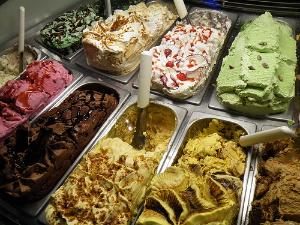 Eat Two Scoops of Gelato Every Day
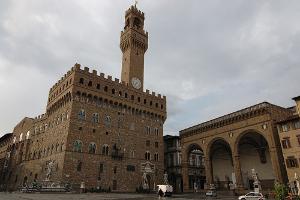 Do Some People-Watching in the Piazza della
Signoria
Do Some People-Watching in the Piazza della
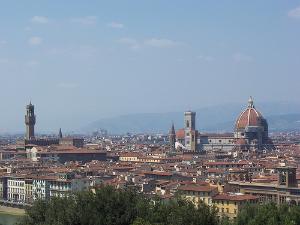
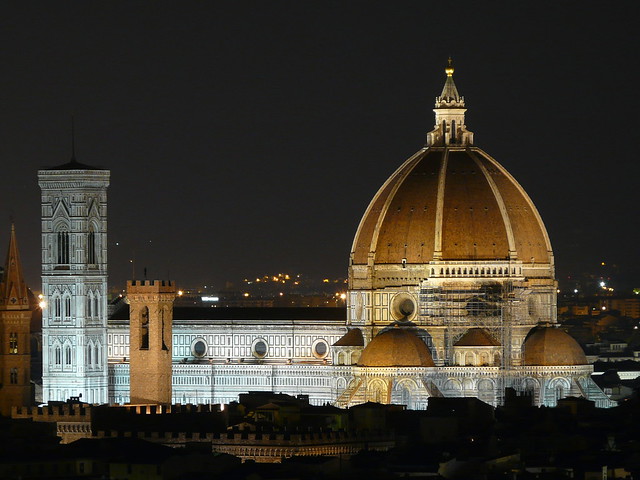
Signoria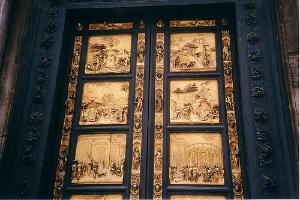 See the Sights in Duomo Square
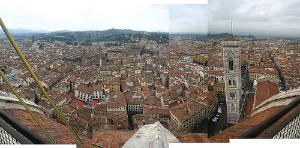 Climb Either the Duomo’s Dome or Giotto’s
Tower
Climb Either the Duomo’s Dome or Giotto’s
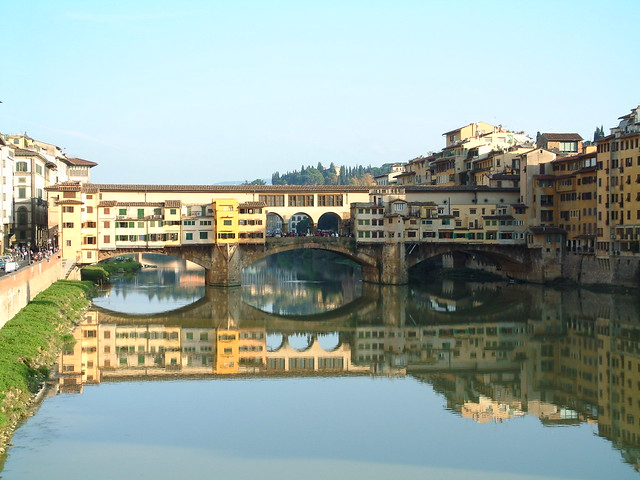
Tower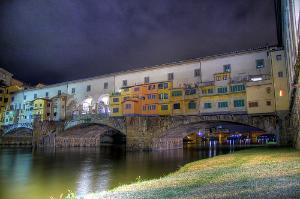 Watch the Arno Pass Under the Ponte
Vecchio
Watch the Arno Pass Under the Ponte
Vecchio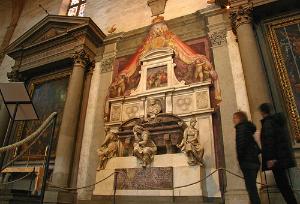 Pay Your Respects at Florence’s Famous
Graves
Pay Your Respects at Florence’s Famous
Graves
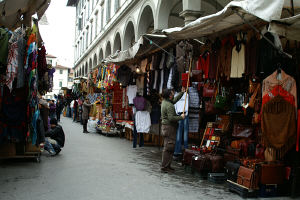 Take a Stroll through the Leather
Markets
Take a Stroll through the Leather
Markets


 The
The  As mentioned above, being in truly historic spaces really gets my blood going, so an easy #2 on my list here is to walk on the cobbled streets of the
  I’ll confess that on my first draft of this list, I actually left Rome’s most famous monument, the
 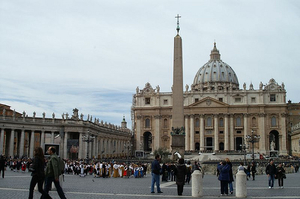 While Vatican City is technically its own independent city-state, no one visits Vatican City on its own without visiting Rome as well. For most travelers, touring the Vatican is one day out of a trip to Rome, and that’s exactly what I suggest when people ask me how much time they should spend in Vatican City – but in addition to allotting a day for the Vatican, I also highly recommend signing on to a good guided tour of the Vatican. This will not only help you navigate the maze of the
  I’m one of the people for whom
 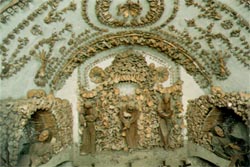 I’ll admit that a visit to the Cappuchin Crypt, one of my favorite sights in Rome, isn’t going to be up everyone’s alley. It’s not big, so it’s a quick visit, but seeing several small chapels decorated (if one can use so mundane a word for this) with the bones of more than 4,000 Cappuchin monks definitely falls into the “creepy” category for some people. While it used to also fall into the off-the-beaten-path-sights list as well, I think the Cappuchin Crypt has been written about so much now that it’s far more common a stop than it once was. So if it doesn’t sound like it’d be your cup of tea, then you have my permission to amend my #5 suggestion slightly to read “check out something weird in Rome.” Everyone visits the Forum, but not everyone visits the
  This one’s a bit vague, so bear with me for a second. My first inclination was to tell you to head for the old Jewish ghetto and order yourself a plate of Jewish-style carciofi, or artichokes, which are deep-fried. But as
  I admit that the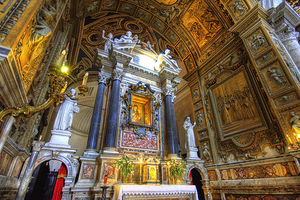
 Every Italian city has an outdoor market where you can buy foodstuffs, and cities the size of Rome have several. But the one that’s worth your time to visit is the market at Campo dei Fiori. It’s not far from the famous
 The "Eternal
City" is one of the most popular tourist destinations in the world. Once the
capital of western civilization, Rome has an incredible number of world-class
attractions, including the Colosseum, the Forums of the Roman Empire, gorgeous
piazzas, stunning fountains, and fabulous museums.
The "Eternal
City" is one of the most popular tourist destinations in the world. Once the
capital of western civilization, Rome has an incredible number of world-class
attractions, including the Colosseum, the Forums of the Roman Empire, gorgeous
piazzas, stunning fountains, and fabulous museums.
 Travel in Venice
oozes romance and history. Canals, beautiful buildings, world famous landmarks -
Venice is an experience unique in the world of travel. Whether taking a gondola
down the Grand Canal or gazing at this romantic city's unique setting and
architecture, Venice is a vision that you will never forget.
Travel in Venice
oozes romance and history. Canals, beautiful buildings, world famous landmarks -
Venice is an experience unique in the world of travel. Whether taking a gondola
down the Grand Canal or gazing at this romantic city's unique setting and
architecture, Venice is a vision that you will never forget.
 From the point
of view of art and architecture, Florence rivals Rome. During the renaissance,
Florence was the art center of western civilization. A list of past residents of
the city represents the "Who's Who" of the Masters, including: Dante, Leonardo
da Vinci, Michelangelo, and Raphael, among others.
From the point
of view of art and architecture, Florence rivals Rome. During the renaissance,
Florence was the art center of western civilization. A list of past residents of
the city represents the "Who's Who" of the Masters, including: Dante, Leonardo
da Vinci, Michelangelo, and Raphael, among others.  Campania is one
of the most popular regions of Italy, and its attractiveness is largely
manifested along its spectacular scenic coast. If you like hairpin turns, this
is a great coast to drive (unless you are stuck behind a string of tour buses).
For mariners there are numerous boating adventures that let you view this
elegant coastline from the sea, where its beauty is close to overwhelming,
especially near dusk.
Campania is one
of the most popular regions of Italy, and its attractiveness is largely
manifested along its spectacular scenic coast. If you like hairpin turns, this
is a great coast to drive (unless you are stuck behind a string of tour buses).
For mariners there are numerous boating adventures that let you view this
elegant coastline from the sea, where its beauty is close to overwhelming,
especially near dusk. Along Italy's
scenic border with the Swiss Alps are several large glacial lakes nestled into
the rolling hills leading to the mountains. The landscape is beautiful, the
shoreline serene and the combination creates an area that is pure delight. The
Italian Lakes are a place to savor. Driving through the area and slowing for a
view will allow you to see a lot, yet miss the best parts of this peaceful,
serene and amazing corner of Italy.
Along Italy's
scenic border with the Swiss Alps are several large glacial lakes nestled into
the rolling hills leading to the mountains. The landscape is beautiful, the
shoreline serene and the combination creates an area that is pure delight. The
Italian Lakes are a place to savor. Driving through the area and slowing for a
view will allow you to see a lot, yet miss the best parts of this peaceful,
serene and amazing corner of Italy.